Parameters
Parameters are global variables that can be used across multiple nodes in a visual notebook. Use parameters to:
- Filter or manipulate data based on dynamic timestamp values
- Create placeholder values for commonly used numbers or strings
- Quickly update multiple instances of a value in a visual notebook
Parameters are supported in select Input Data nodes, nodes that allow custom SQL, and schedules.
Create a parameter
Open a visual notebook to create and manage parameters. Once in the visual notebook canvas, select the curly bracket icon highlighted in Figure 1 to display the parameter modal.
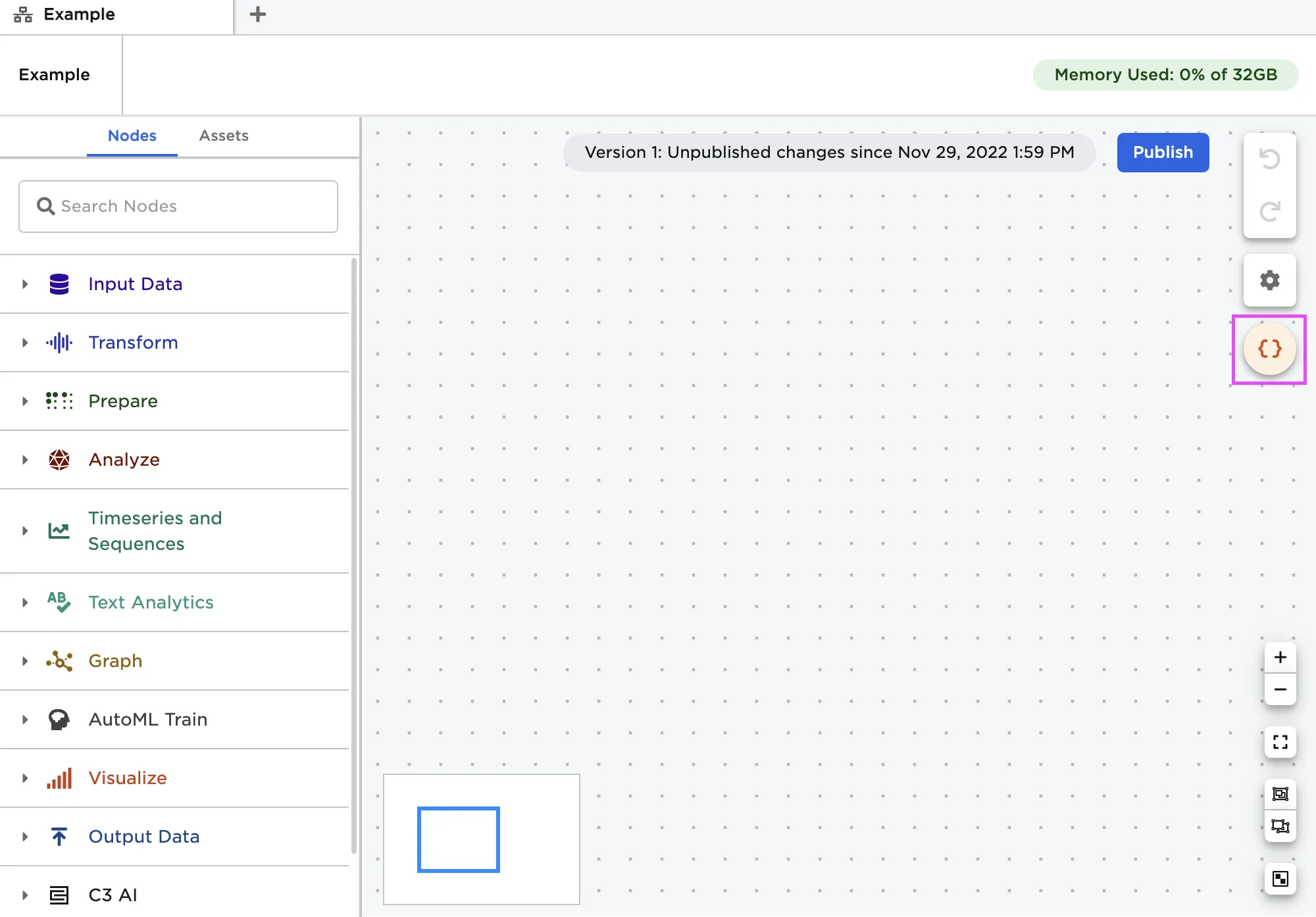
Figure 1: Parameter button
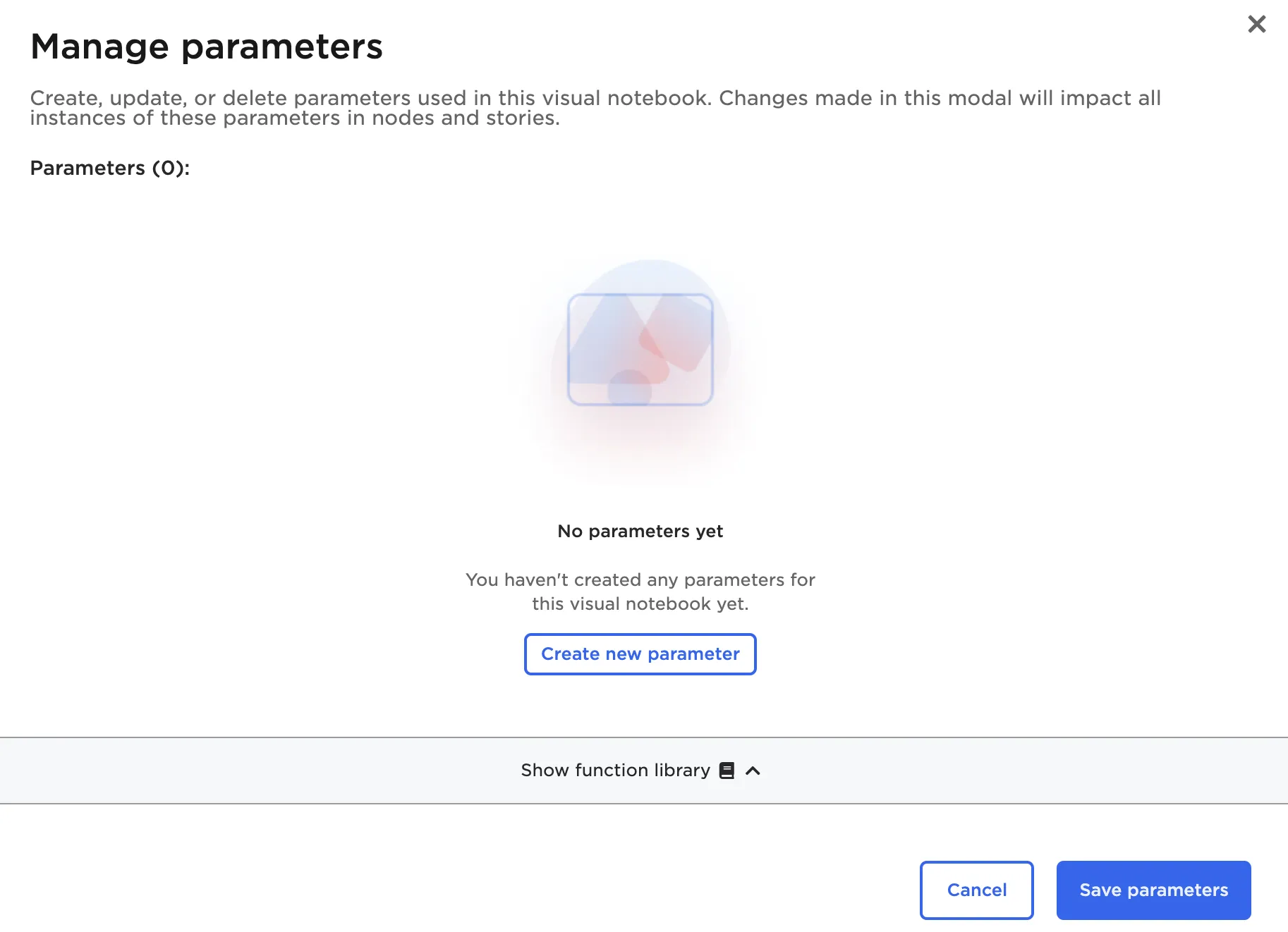
Figure 2: Parameter modal
Select Create New Parameter to create a new parameter. Parameters can use a variety of pre-defined functions. To view a list of available functions, select Show Function Library.
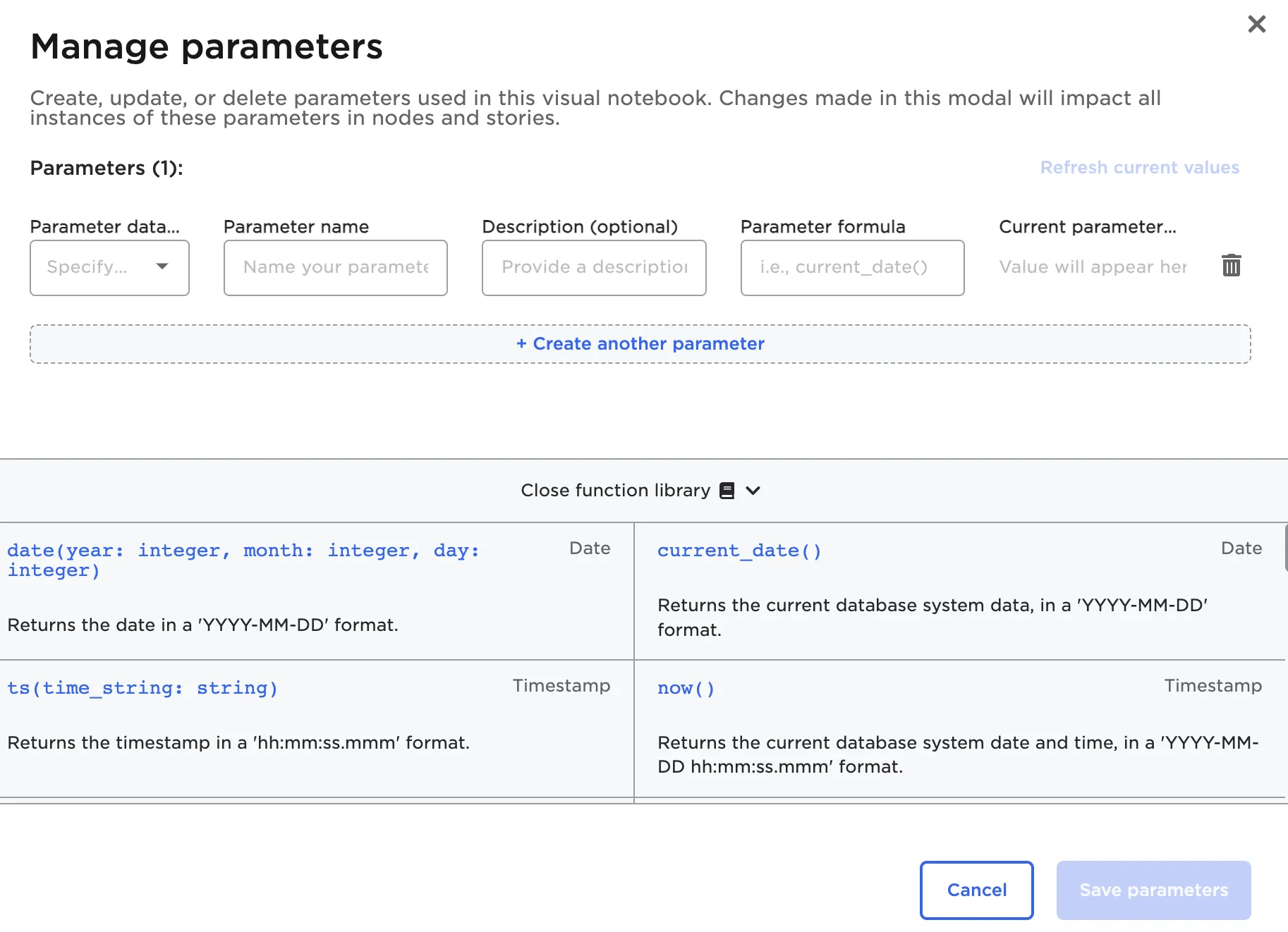
Figure 3: Built-in function library
When defining a parameter, you must specify the data type, name, and formula. Parameters support embedding a function inside another function. For example, plusWeeks(current_date(), 3) is a valid parameter formula. Additionally, parameters support basic arithmetic when defining an integer or double.
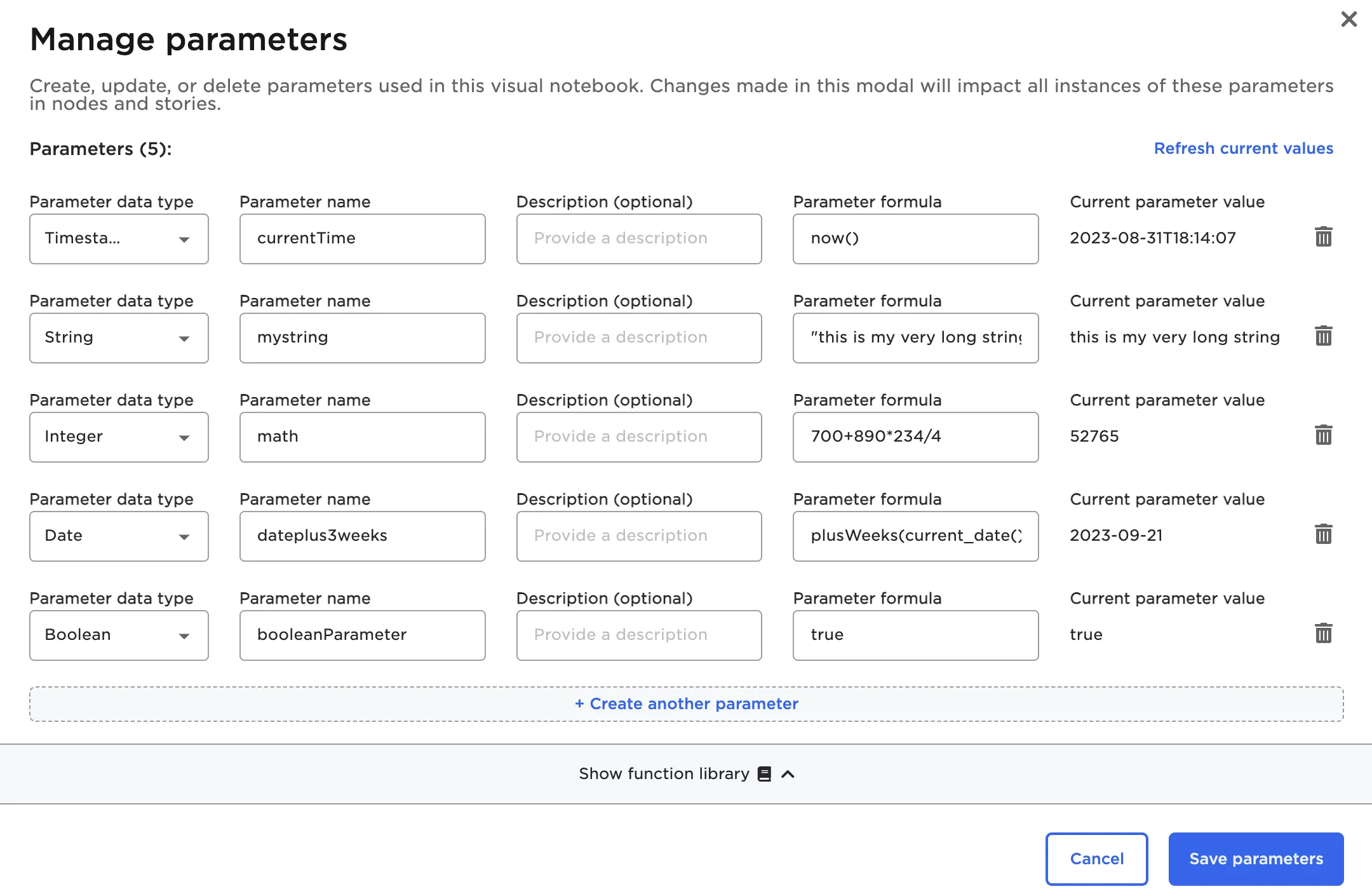
Figure 4: A variety of configured parameters
Select Save Parameters to begin using parameters in your visual notebook.
Use a saved parameter
To use a parameter in an Input Data node, define a SQL query or use the optional Filter by Value widget. Within the Filter by Value widget, toggle the Parameter mode switch on. Toggling this switch populates the Define Value field to include all configured parameters.
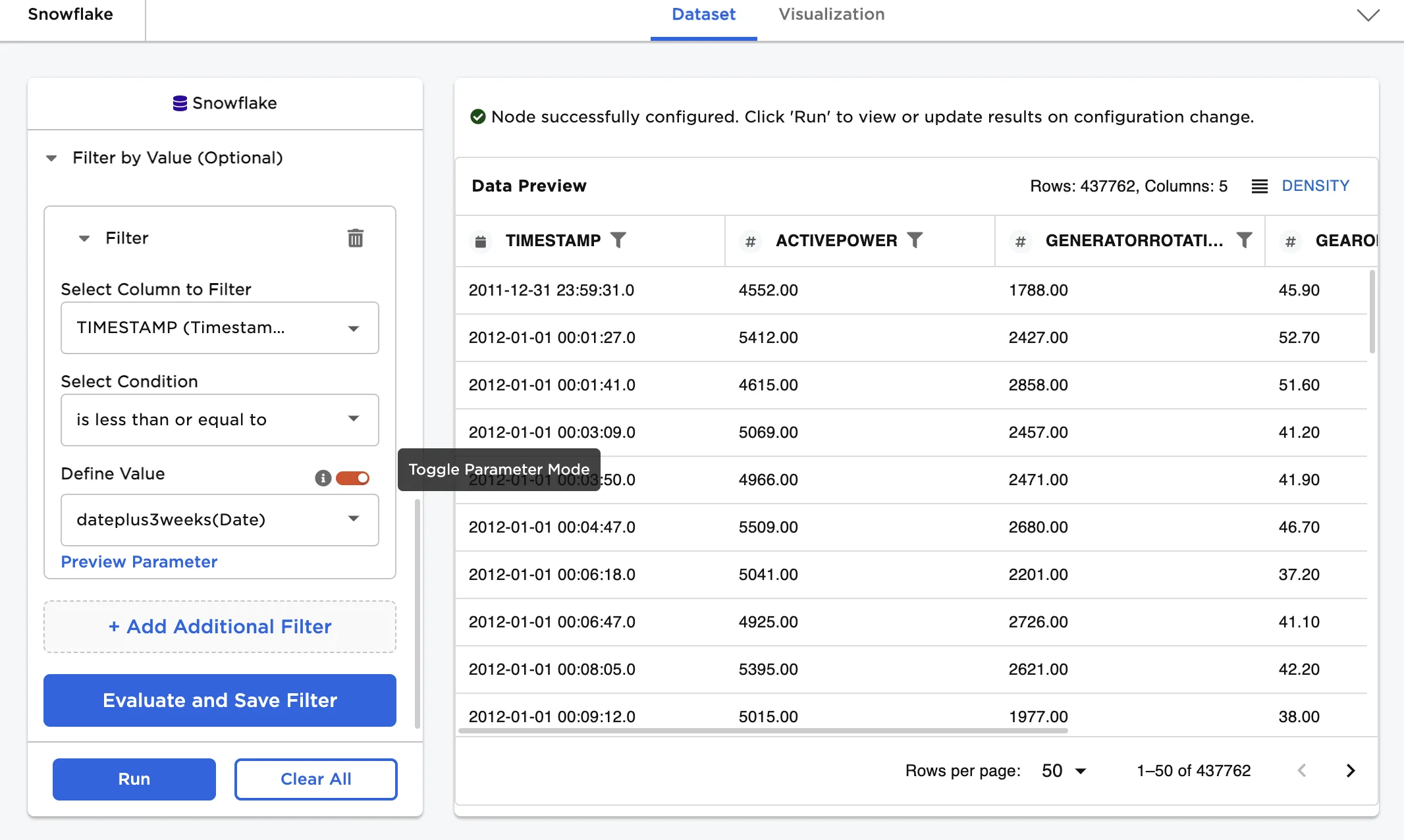
Figure 5: Parameter Mode toggle in Input Data nodes
Once a parameter is selected, select Preview Parameter to see the formula for the chosen parameter and the current parameter value.
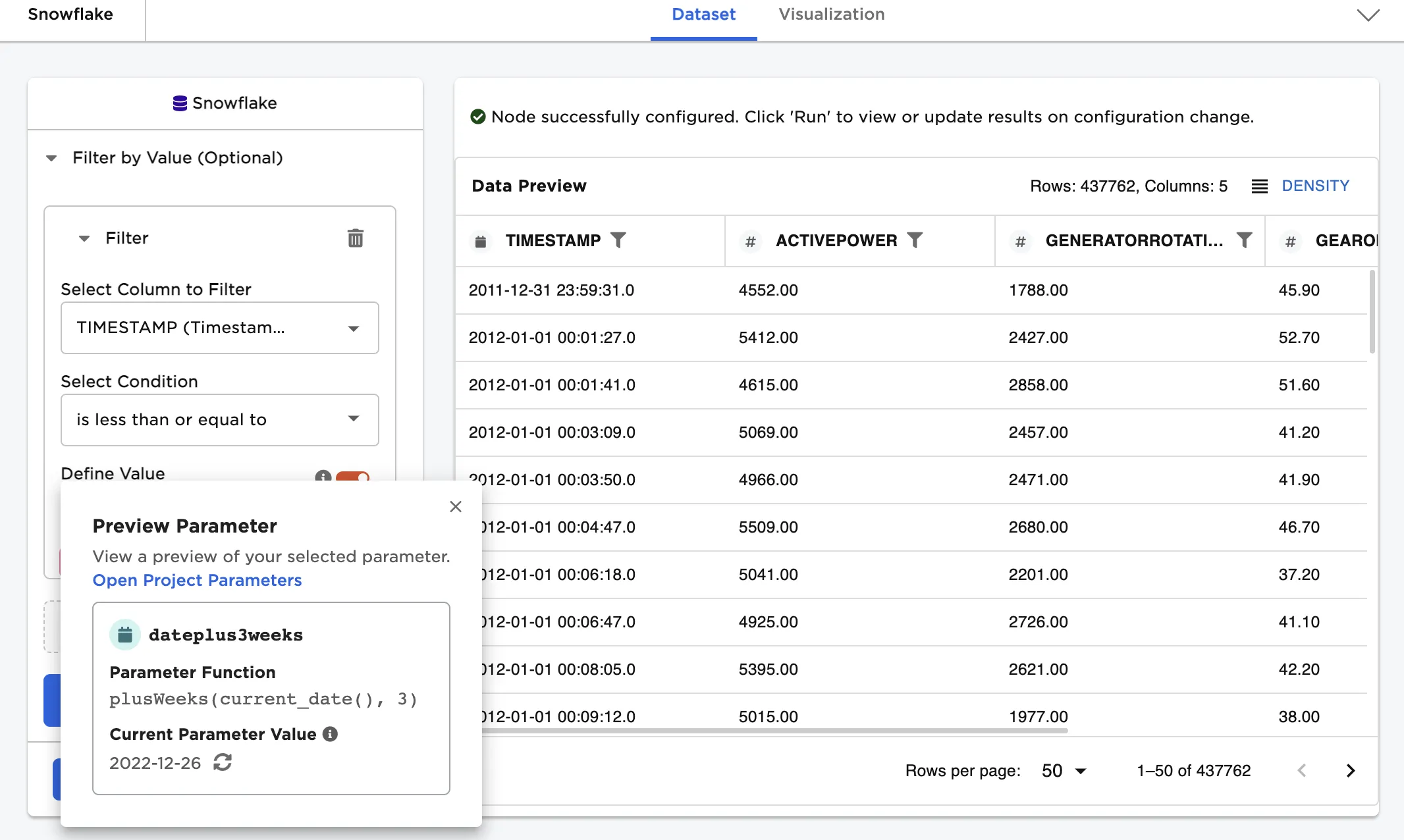
Figure 6: Preview Parameter modal
Parameters can also be used in nodes that allow custom SQL, such as Custom SQL Function, Filter by SQL, Split by Filter, and select Input Data nodes. Supported nodes include a list of configured parameters underneath the SQL Formula field.
To use a parameter, prefix it with $. Depending on the SQL functions used, you may need to encase the parameter in single quotes or curly brackets.
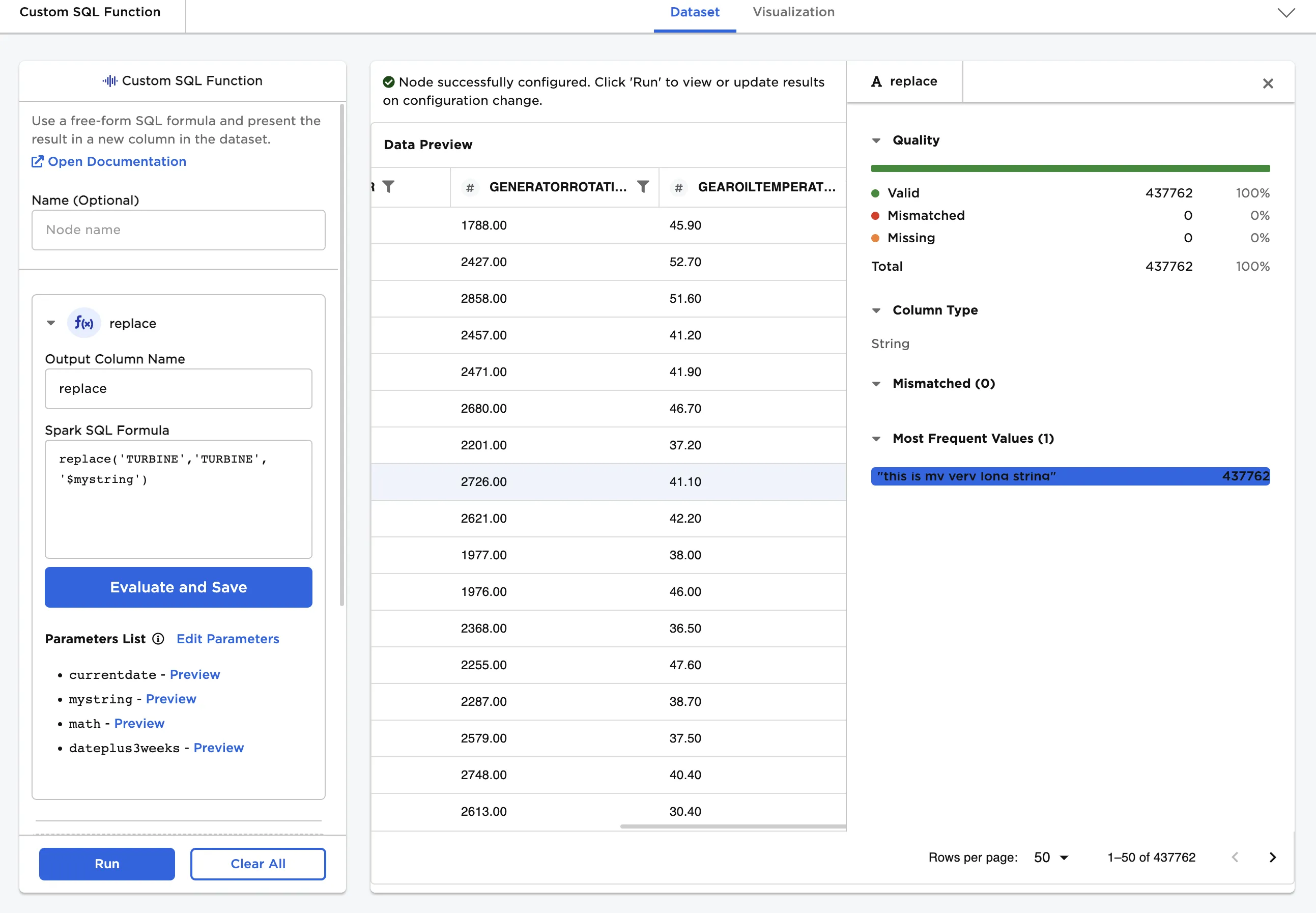
Figure 7: Parameter used in a custom SQL expression
Nodes that are configured to use parameters display a curly bracket icon when viewed on the canvas.
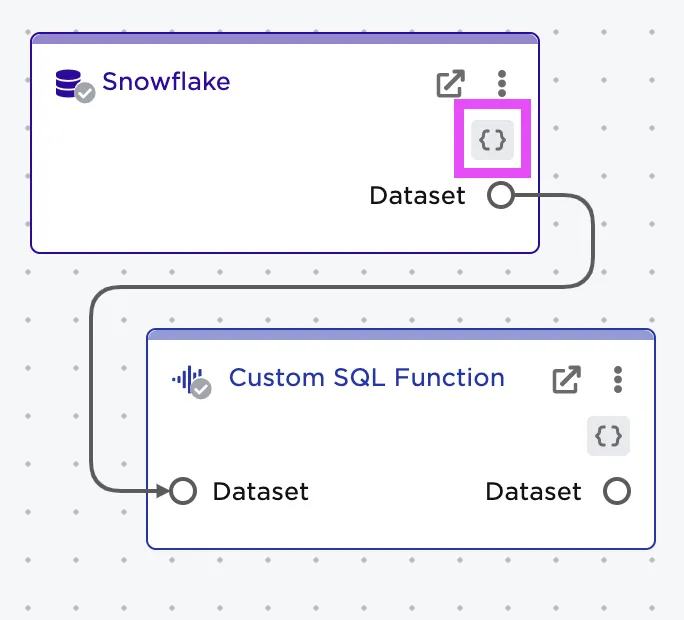
Figure 8: Parameter indicator on nodes